Wednesday, July 1, 2009

Surprising Facts about 10 Bestselling Authors (Courtesy of Mental Floss Magazine)

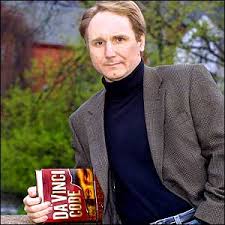
1. Dan Brown didn’t get his start as a writer. Oh, no. Before he penned thrillers like The Da Vinci Code, Brown worked as a pop singer and songwriter. His second solo album, Angels & Demons, even shared its title with one of his literary juggernauts.

2. Former lawyer and politician John Grisham may not need to practice law now that he’s moved 250 million copies of his books, but he did head to court on one special occasion after his literary success. In 1996 Grisham returned to the courtroom to represent the family of a railroad brakeman who was killed on the job. Apparently Grisham still had his chops; he won the case (and over $650,000) for the family.


3. Nora Roberts has been a staple on the New York Times Bestseller List for years, but it wasn’t easy for her to get her foot in the door. According to Roberts, when she was submitting her manuscripts to romance giant Harlequin, the publisher sent her a note rejecting her work because they “already had their American writer.”


4. Danielle Steel’s life sounds surprisingly like something from a Danielle Steel novel. The author has been married five times, and there have been some real winners in the bunch. According to the San Francisco Chronicle, husband number two was a bank robber who was convicted of raping a woman while he was married to Steel, and the third Mr. Steel was a heroin-addicted burglar.


5. The late Sidney Sheldon wrote a whole raft of bestsellers even though he didn’t start writing novels until after he turned 50. Sheldon kept himself pretty busy before his career took off, though, by creating TV hits like The Patty Duke Show and I Dream of Jeannie. Sheldon also won an Oscar for Best Original Screenplay for penning The Bachelor and the Bobby-Soxer.


6. Bestselling thriller author John Sandford’s work may not be considered high art, but he’s got something a number of his more ambitious literary colleagues would kill for: a Pulitzer Prize. Sandford, whose real name is John Camp, picked up a Pulitzer for Non-Deadline Feature Writing in 1986 for a series of articles in the Saint Paul Pioneer Press that chronicled a year in the life of a Minnesota farming family.


7. Having Stephen King as your dad has its perks. In the late 80s, King’s son Owen was just as obsessed with G.I. Joe as any other boy. Owen, though, got a little shout-out most of us didn’t receive. When Hasbro introduced the new G.I. Joe Sneak Peek in 1987, the character’s promotional materials stated that his real name was “Owen S. King,” a gesture that may have stemmed from Owen’s dad helping to create another G.I. Joe character.


8. Thriller author Clive Cussler often writes about searches for underwater shipwrecks, and it’s a topic he knows a thing or two about. Cussler founded the non-profit National Underwater & Marine Agency, and together with his NUMA volunteers has located more than 60 historically significant shipwrecks.


9. Jodi Picoult has enjoyed quite a bit of success as a novelist, but she’s also dabbled in comics. In 2007, she wrote a five-issue arc for Wonder Woman.


10. Nicholas Sparks’ works like The Notebook fly off of store shelves, but they might not move as quickly as their author. Sparks not only attended Notre Dame on a track scholarship, he also helped set a still-standing school record in the 4 x 800m relay.


Monday, June 29, 2009

The Librarian Song

In my continuing effort to elevate our profession, I just wanted to share this little ditty with you all.

Wednesday, June 24, 2009

A Literary Legend Fights for a Local Library


“I don’t believe in colleges and universities,” Ray Bradbury, 88, said. “I believe in libraries.”

Full story here.

Monday, June 22, 2009

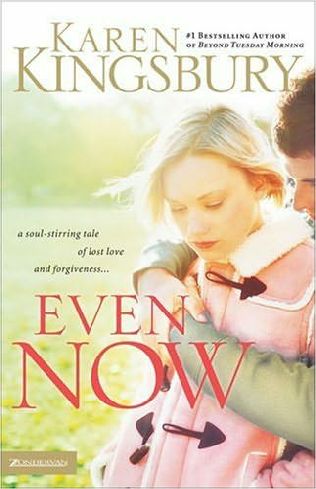
Even Now by Karen Kingsbury

This book was this month's selection for Book Club. It is the first Kingsbury book I have ever read, though she is a very popular checkout at the library. Time magazine has called her the Queen of Christian fiction and she is currently America's best selling inspirational author. There is no doubting the popularity of Christian fiction, from Christian fantasy (Chronicles of Narnia), to Christian suspense (The Left Behind series, as well as the more recent Ted Dekker and Frank Peretti books) to Christian romance novels (Janette Oke and Dee Henderson), as well as the Amish faction represented by Beverly Lewis and Wanda Brunstetter.

This book is #1 in Kingsbury's "Lost Love" series. This is a book that deals with teenage pregnancy, and even involves the war in Afghanistan later in its narrative, and is full of Kingsbury's trademark sentimentality. It is a book that explores young love and the ramifications of poor choices.

The story involves a young couple, Shane Galanter and Lauren Anderson. Lauren becomes pregnant at the young age of 17. Both Shane's parents and Lauren's are against them keeping the baby and try to talk her into putting the baby up for adoption, having the kids finish high school and go on to college, and basically just going on with their lives. Lauren wants to keep the baby from the start and try to make a life with Shane, despite their extreme youth. The book then follows a series of choices that the couple and their family make and how these choices lead to tragic ramifications in their lives. There are several implausible occurrences that happen over the course of the story and Kingsbury is somewhat simplistic in some of her portrayals, but the basic story has plenty of sentiment to keep the reader involved and it's a heartwarming story about forgiveness and the power of love.

Friday, June 19, 2009

Cover Browser


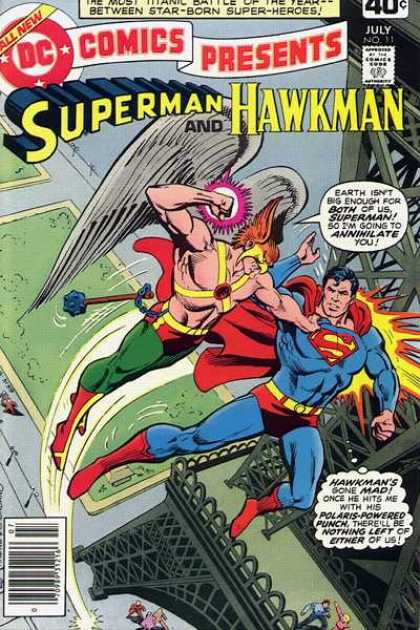
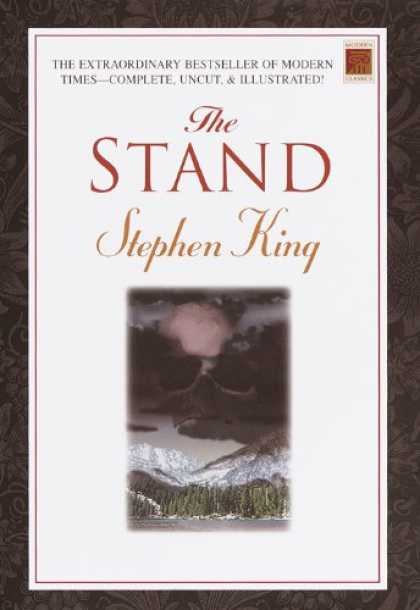
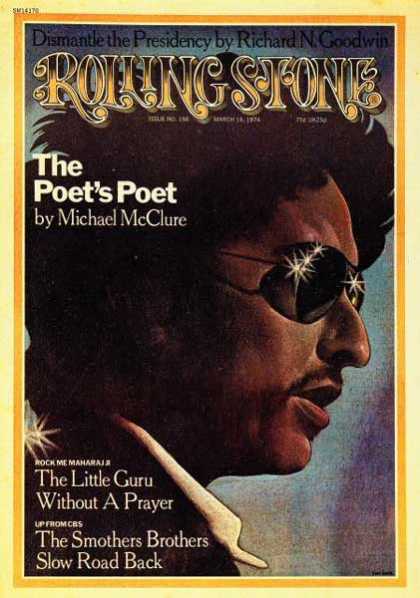
What do these three images have in common? They all come from a fantastic new website I stumbled across that allows you to view 300,000+ covers of comics, books, magazines, and more. For instance, if you click on Magazines, the menu expands to show all of those available. If you click on "Mad" it will show you all the issues from #1 up through the most current. It's a fascinating place to spend a little time browsing. Check it out. Here's the link.

Wednesday, June 17, 2009

Amazon


Is Amazon taking over the book business? Check out this recent Time magazine article on Amazon and its founder, Jeff Bezos. Time Article. I found it very interesting. I think I say several times a day when looking something up on Amazon for a patron, "Gee, I don't know what we did before Amazon came along." This article on Amazon's vast empire and how it got so big is very thought provoking. And how about that Kindle? I haven't purchased one yet, I'm still too much of a bibliophile for that. But I do like the fact that you can store 1500 books on one. It's a lot easier to carry your reading with you if you have one of these new toys than it would be to carry the actual books (not that you would want to carry 1500 with you!). Anyway, very interesting....

Monday, June 15, 2009

Wicked Plants: a book of botanical atrocities

I'd like to recommend this book to you for several reasons. #1--The Title (specifically the subtitle part that says, "the weed that killed Lincoln's mother"). #2--The book trailer is very cute and it has menacing botanical illustrations and gastly drawings. #3--It will hopefully entertain and enlighten gardeners and nature lovers. It looks like it will be an Indie best seller. Look for it.


Sunday, June 14, 2009

Shutter Island by Dennis Lehane

This book was written in 2003, and we read it as part of our book club selections awhile back. It was a very fast paced, excellent thriller, that I found very atmospheric, and I loved all the twists and turns of the plot line. The story takes place in 1954 in a psychiatric hospital on Shutter Island. U. S. Marshalls investigate the disappearance of a patient who had committed multiple murders. The book is very gothic in tone, but I thought it was one of our better book club selections.

What makes me think of it now, and offer it up as a good read, is this trailer just posted for the movie coming out in October. I'm looking forward to the movie, as I very much enjoyed the book. The movie will be directed by Martin Scorsese and starring Leonardo DiCaprio (one of the most talented young actors on the scene today, and someone who I always try to catch in whatever role he is currently playing). It looks like the film is going to do a very good job of capturing the mood or feel of the book. But I do advise you to read the book first, before you see the film. You'll enjoy the book and it will no doubt enhance the film experience for you.


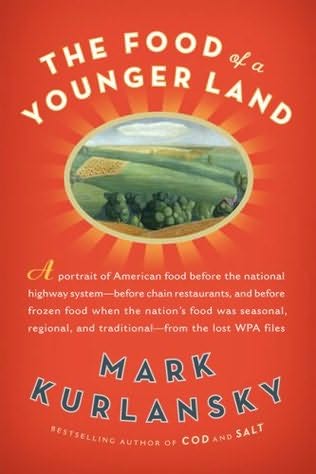
The Food of a Younger Land

Ever since I changed my diet to vegetarian, I follow closely any books about our food, how it's grown, distributed, and consumed. Two of my favorite books along these lines is Fast Food Nation by Eric Schlosser and The Omnivore's Dilemma by Michael Pollan.

In fact, there is a documentary done by Eric Schlosser and Michael Pollan released on DVD called Food Inc. that I intend to buy. Here's the trailer:


I am a supporter of our local Farmers Market and the entire movement to buy locally grown produce, where it is picked at the peak of its freshness, picked within a few hours of when you buy it, and local growers reap the profit--not some anonymous middle man.

The thing that attracted me to this book was its subtitle: "A portrait of American food--before the national highway system, before chain restaurants, and before frozen food, when the nation's food was seasonal, regional, and traditional--from the lost WPA files".

This book takes us back to the food habits of a younger America, before the interstate highway system brought us all closer together, before chain restaurants erased geographical boundaries and brought a uniformity and diminishing of quality, and before refrigeration led us to frozen food in mass quantity.

In the 30's during the depression Roosevelt created the Federal Writers' Project under the Works Progress Administration. They dispatched writers across the country to report on the eating habits, traditions, and struggles of local people. The project was called "America Eats", but it was abandoned in the early 40's because of the war. Kurlansky has unearthed this forgotten treasure and brings it to life in this book. The book contains many recipes and Kurlansky does have a keen eye for odd facts and natural details. In the section "The South Eats" there is a recipe for Kentucky Ham Bone Soup (a plantation recipe) and Kentucky Burgoo.

This book is a fascinating read about a bygone era when Americans had never heard of fast food and grocery superstores were unimaginable.

Monday, June 8, 2009

In Defense of the Sci-Fi genre


I love reading science fiction/fantasy. I find it a genre of ideas, and I love to see how they take basic science and build on it to come up with really interesting future scenarios in their stories. I think it is a misunderstood genre in a lot of ways. I think those folks who say they don't like it are thinking of some pretty awful stuff they may have stumbled across somewhere along the way and they think that this drek represents the whole genre.

I read a really terrific column by Ben Bova on naplesnews.com called Maybe Leaders Should Read More Science Fiction. I agree with everything Ben says in the column, but in particular these two paragraphs stood out:

"In the past, science-fiction writers have written about computers, robots, space flight, nuclear power, organ transplants, prosthetic limbs, brain stimulators, climate change, overpopulation and a myriad of other ideas and possibilities — usually several decades before they became actualities.

If our political leaders had been reading science fiction, we might have been spared the Cold War, the energy crises, the failures of public education and many of the other problems that now seem intractable because we were not prepared to deal with them when they arose."

I wish I could get our local book club to read more of this genre, but they don't seem too interested in it. Maybe I should share with them Ben's closing paragraph:

"Science fiction, at its best, is an experimental laboratory where you can test new ideas to see how they might affect people and whole societies. To my mind, it should be required reading for everyone."

I agree.

Note: Naples resident Ben Bova is the author of 120 books, including “The Immortality Factor,” a novel about stem-cell research. Bova’s Web site address is www.benbova.com

From LISNews Librarian And Information Science News

Librarians As Heroes

Most people who enter the library need assistance, and sometimes it's not just a matter of an easily answered question.

Will Van Sant of the Tampa Bay Times reminds us that the current economy has created additional duties for this new brand of librarian...librarian-cum-social worker. He calls them 'the heros of the recession'.

Van Sant says: "Take mild-mannered David Stoner. Trained to help adults discover the trial of Socrates and sixth graders track the Oregon Trail, he now spends half his time in the trenches of a battered economy. There his job is far more urgent: helping people who need jobs, food stamps or Medicaid.

"These days, it's really social work in some respects," said Stoner, who directs adult services for the Clearwater Public Library System. "And it's really satisfying to see how much you are helping.

Karen Prall has been a Clearwater library regular since September, when she lost her dental assistant job. She doesn't like going to WorkNet Pinellas, a nonprofit workforce development agency. She said staff there are overworked, disorganized and dismissive.

When she visited the library on a recent Friday afternoon, Stoner swiftly had Prall, who has limited computer experience, posting her resume to the Web.

"The library is really the only place you can go to get direct help immediately," said Prall, 39. "You ask them and they don't say, 'I'll be with you in 20 minutes.' They'll come over and help you right away."

Wednesday, May 27, 2009

Twilight by Stephanie Meyer

I've been reading a lot about vampires lately. One of the articles I read started out with this sentence "Not since Buffy slayed her last victim and Ann Rice had a return of faith have there been so many vampires in the library." How true, how true. That line came from an article entitled "The Rise of Vampire Literature". It is no coincidence that one of the largest segments of the audience for vampire literature is the young adult. This is a time when there is much confusion, lots of nagging questions, endless problems, and a frightening array of choices. Growing up can be a daunting prospect involving separation from family and the burden of becoming a responsible adult.

Norine Dresser, in her book American vampires (1989) reports findings of a survey she conducted among college and high school respondents who were identified as vampire fans. They were asked to list those things that appealed to them. The top result was sexual attraction. The vampire represents the forbidden, the mysterious and the exciting. The next most popular response was Immortality, living forever as a youth with vitality and energy. The third most popular was Power, the ability to control others or to dominate the opposite sex, the ability to drain life or to bestow eternal life. The fourth most popular response, Blood Lust. The fifth, the Beauty, Elegance and Sophistication of the vampire. And the sixth most popular response, Marginality, the vampire as someone "different", an outsider and also persecuted for that difference.

Ms. Meyer does a good job of incorporating all these elements in this, the kick-off book to her Twilight series. She manages to successfully capture the passion of a teen's first love. Bella Swan moves to Forks, a small town in Washington state, where it is damp and dreary, to live with her Dad. There she meets the mysterious Edward Cullen, who just happens to be a vampire. This is their love story that Ms. Meyer has reportedly said came to her in a dream. As Bella learns more about the mysterious Edward and his family, she is thrown into a dangerous adventure, and called upon to make the ultimate sacrifice to save the one she loves.

I think it's extremely interesting that Ms. Meyer is a Mormon mother of 3 who has never seen an R-rated film in her life and just happens to write a series of vampire novels that is the most popular thing since Harry Potter. She obviously knew how to tap into the vast reservoir of teen angst in her storyline. And though sexual attraction is at the top of the list for vampire lovers, Ms. Meyer's Twilight has sex without sex. It has all the trappings of sex, all the feeling of a sensual experience, but none of the real sex, so it has won over part of the adult audience because of its chaste portrayal of young love. Here's another direct quote that drives the point home: "The literary vampire presents a mirror, even if a dark mirror, to the adolescent and shows that all the problems they may face can be resolved. All the mysteries, whose solution permit you to join the ranks of the adult, can be fathomed." [from Vampire Literature: Something Young Adults Can Really Sink Their Teeth Into" by Joseph De Marco]

To peruse a list of literary vampire books, rather than the urban fantasy or horror variety, click here.

Sunday, May 17, 2009

Practical Demonkeeping by Christopher Moore


This is the well written and light hearted debut novel from Christopher Moore. It is the first of his series of books that are known to be comic fantasies, satirical, and laugh out loud funny.

Pine Cove, a small California town, is visited by a demon and his master. The demon from hell, Catch, has a nasty habit of eating most of the people he meets. His master, Travis, is a 100 year old ex-seminarian. Travis has been trying to get rid of Catch, but has lost the necessary incantations. He thinks he has traced them to Pine Cove, but the local residents and a djinn (or genie) who is pursuing Catch create considerable hilarious complications.

Several characters from this novel continue their lives in later books, and the setting itself is revisited in The Lust Lizard of Melancholy Cove and The Stupidest Angel. Moore is good at combining humor and horror and has made a good living doing it. If you're a Moore fan, this book will not disappoint. As for me, I'm going to finish reading the series. I like the laughs.

Monday, May 4, 2009

Obsession by Karen Robards

O.K. I freely admit, up front, that I am not a romance genre fan. It drives me crazy that people come into the library and check out Harlequin/fill in the blank romance paperbacks by the bag full and many an excellent book remains on the shelf unread. I jokingly call the whole romance genre "bodice-ripper" romance. They are cranked out too fast and are too formulaic to be of interest to me. The only way I like to read this particular genre is if you throw in a little history or humor or something.

In the case of Karen Robards, first of all she's a Kentucky author, and I'm kind of partial to those Kentucky authors. She does have a lot of humor in what she writes, so I like that too. She has an interesting website and a household full of boys and pets. And her books are a fast pleasant read.

In Obsession, Katharine Lawrence finds herself and a friend lying bound and gagged on her kitchen floor while two masked gun wielding thugs are searching her house. She doesn't know what they are searching for, only that she could wind up dead if they don't find what they are looking for, or even if they do find it. In the aftermath of this breakin, her friend is killed and she finds herself in the hospital with something drastic going on in her brain. She doesn't recognize herself when she looks in the mirror. The doctor at her bedside is kind of familiar, but her mind is totally at odds with herself. All she knows is she can't trust anyone, not even her own memories.

Robards manages to make the book interesting enough to keep you turning the pages to see how this all plays out and there is even a neat little twist at the end that wraps it all up together nicely. So though I don't read this kind of book much, it is a pleasant enough diversion. It may be for you too.

Wednesday, April 15, 2009

Extremely Loud & Incredibly Close by Jonathan Safran Foer


A friend of mine laid this book on my desk and said "you've got to read this". Something in the way she said it made me take notice, and it was buried in my "to read" pile till just recently.

When I started reading it, I was immediately impressed with the writing style. It's pretty much stream of consciousness style, and I really related to that. It also was so clever and profound and emotional that it touched me deeply.

The book was written in 2005, and was one of the first novels about the terrorist attack of September 11th. Jonathan Foer brings a multimedia approach to this book using different type settings, spaces, and even blank pages to give the book a visual dimension beyond the written prose. There is even a little flip book effect at the end of the book, that uses the famous falling man picture from 9/11, to really bring home the emotional thrust of the end of the story.


The book's narrator is a precocious 9 year old boy named Oskar Schell. Oskar lost his father in the 9/11 disaster and is depressed and traumatized. He is overeducated and over sensitive. Oskar searches New York for the lock that matches a key his father left behind. This quest weaves together Oskar's story and the story of his grandparents whose lives were destroyed by the fire bombing of Dresden.

Throughout the novel Foer uses images to connect ideas and themes. I truly loved this compelling, extremely moving, and beautifully written book. My heart soared while I read it, and my mind raced with all the ideas it contained.

Saturday, April 11, 2009

Buffalo Gal by Laura Pedersen

Laura Pedersen was the youngest columnist for The New York Times and, prior to that, the youngest person to have a seat on the American Stock Exchange. She has a finance degree from New York University's Stern School of Business. Her nonfiction book Play Money, about working on Wall Street, became a best seller. In 1994, President Clinton honored Pedersen as one of Ten Outstanding Young Americans. She has appeared on CNN, The Oprah Winfrey Show, Good Morning America, Primetime Live, The Today Show, and The Late Show with David Letterman. She has also performed stand-up comedy at the Improv, among other clubs, and writes material for several well-known comedians.

"Last Call" was a book of hers that our book club read a couple of years ago. Her characters in that book were so interesting and funny that they just jumped right off the page, and the book contained so much about life and faith and love and the kind of wisdom and acceptance that we all long for, that it was one of my favorites read that whole entire year.

This book is her memoir of growing up in Buffalo, New York, a place that has double the country's unemployment and triple the snowfall. But this warm hearted book of her childhood years is full of funny anecdotes about her eccentric family members and contains a great dollop of social history that captures the era quite vividly. And all of it wrapped up nicely in Laura's trademark humor.

Laura was the proverbial wild child growing up, the only child of unconventional parents. Her father was a chain smoking court reporter and her mother was a psychiatric nurse at a time when most mothers stayed home. She was left alone a lot growing up and therefore learned to be very independent quite early on. Her memories of the harsh winters and amazing blizzards of her childhood are told with her typical charm and she manages to capture the decline of the hometown she clearly loves in her own unique way. You don't have to have grown up in Buffalo to identify with her stories, and the friendships and discoveries and lessons learned come across in a lovely way.

Laura talks about being impressed with a man named Earl Nightingale, a motivational self-help guru along the lines of Dale Carnegie or Dr. Norman Vincent Peale. She said he became the portable tent that she would carry through life. Some of Earl's pearls of wisdom were that our attitude in life determines life's attitude toward us; we can let circumstances rule us, or we can take charge and rule our lives from within; what's going on inside shows on the outside; whenever we're afraid, it's because we don't know enough and if we understood enough, we would never be afraid; people with goals succeed because they know where they're going; your world is a living expression of how you are using your mind; wherever there is danger, there lurks opportunity and wherever there is opportunity, there lurks danger as the two are inseparable; creativity is a natural extension of our enthusiasm; you can help others by making the most of yourself more than in any other way; and you become what you think about. Good sound advice that Laura put to work in her own life and it no doubt helped her become the success that she is.

This was a very enjoyable book.

Friday, March 27, 2009

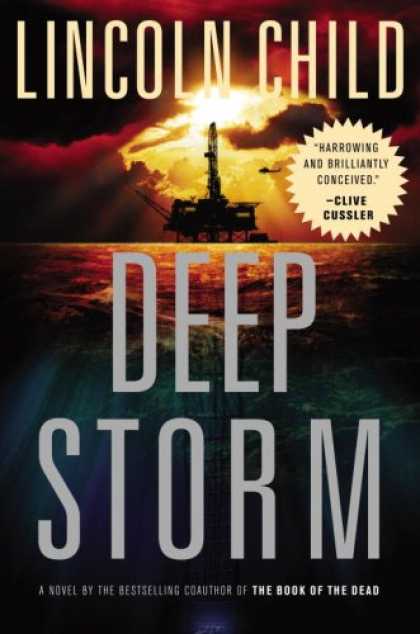
Deep Storm by Lincoln Child


A former Naval doctor, Peter Crane, is brought aboard an oil platform in the north Atlantic to help diagnose a medical illness. When he gets there, he is sworn to secrecy and transported deep below the surface of the ocean to the ocean floor, to a facility called Deep Storm, where the real trouble lies.

Deep Storm is a science research station two miles beneath the surface with stunning technological advancements. He is at first told that they think they have discovered the remains of an ancient civilization there, perhaps the legendary Atlantis. But during excavation of the site, a series of illnesses has begun to affect the people involved in the excavation. As he begins to investigate these strange illnesses, he starts to suspect that the facility is concealing something completely different, perhaps something much more sinister. And then people start dying and it is up to Dr. Crane to unravel not only the mysterious nature of the illnesses, but the mysterious layer of lies and illusions that seem to surround him.

Lincoln Child is probably best known for being coauthor (along with Douglas Preston) of a series of bestselling thrillers. I found this book well crafted, imaginative, and just a lot of fun. It kept me wanting to turn the pages to see what happens next, and finish one more chapter, before putting the book down and turning my attention to other things for awhile. This book would appeal to science fiction fans, as well as fans of thrillers.

Monday, March 23, 2009

Things coming up in April

This exciting national campaign is an effort to get students out of the classroom and into the great outdoors to explore, learn about and enjoy the environment. Students love learning about their own world, but many do not have the opportunity to take part in well-planned, outdoor educational and exploration activities. Many teachers don’t realize the value of, or are not given time for, using the amazing real-world laboratory that exists just outside the school doors. This campaign will get teachers and kids outside to learn and will focus congressional attention on the value of environmental education.

Research has shown the value that environmental education brings to schools. Kids grow more engaged in their work and perform better on assessments in every subject.

We believe that all children should be given the chance to learn more about their world.
Let’s start making sure that happens. Please support and take part in “No Child Left Inside Days.”

Please click here for information on how you can help.


April is National Poetry month. As part of that month long celebration of poetry, there is Poem in Your Pocket Day on April 30th. National Poetry Month brings together publishers, booksellers, literary organizations, libraries, schools, and poets around the country to celebrate poetry and its vital place in American culture. Thousands of businesses and non-profit organizations participate through readings, festivals, book displays, workshops, and other events. Please click here for more information.


We Shall Remain is a groundbreaking mini-series and provocative multi-media project that establishes Native history as an essential part of American history. Airing in April, five 90-minute documentaries spanning three hundred years tell the story of pivotal moments in U.S. history from the Native American perspective.

Produced by the award-winning PBS series American Experience, We Shall Remain is a five-part television series that shows how Native peoples adapted and fought back-- from the Wampanoags of New England in the 1600s who used their alliance with the English to weaken rival tribes, to the bold new leaders of the 1970s who harnessed the momentum of the civil rights movement to forge a pan-Indian identity.

An unprecedented collaboration with multiple media platforms - radio broadcast, Web and new media, a mentoring program, educational and community outreach campaigns, and media partnerships -- will give the series maximum impact. Peggy Berryhill, Director of Media Architecture and Services for Native Public Media, will produce a series of radio broadcasts for the project.

For more information click here and here.

Friday, March 20, 2009

Fool by Christopher Moore


"Hilariously raunchy and politically incorrect."
"Chris Moore is no fool."
"Great fun, don't have to know Shakespeare. "
" If only Shakespeare were this entertaining."
" Hilariously, insanely nuts. "
"A bawdy romp where the "fool" uses his brains to get what he lusts for."
"Astoundingly hilarious."
"You'd be a fool not to read it."

These are all titles of customer reviews taken from Amazon. To be honest, these were all written by die-hard Christopher Moore fans, so I guess you should expect all the accolades. I too am a big Christopher Moore fan. I love the quirky humor in his books. But I hasten to add he's probably not everybody's cup of tea. I do remember an older patron coming into the library and pointing out one of his books on the shelf and saying "this guy is one sick little puppy". But if you like caustic, wry, sarcastic humor, you will probably like Moore's books.

I liked this one overall, and thought the footnotes were some of the most hilarious parts. It was a little bawdy for my tastes, but then Moore doesn't do anything half way, so over the top on this aspect is probably what he was striving for.

It's 1288, and the king's fool, Pocket, and his dimwit apprentice, Drool, set out to clean up the mess Lear has made of his kingdom, his family and his fortune—only to discover the truth about their own heritage. This is Moore's retelling of Shakespeare's King Lear. It's profane, vulgar and crude, with a Monty Python twist. But it is indeed laugh out loud funny.

Monday, February 23, 2009

My Antonia by Willa Cather

Our Bookclub decided to read this classic book (written in 1918), and I'm glad we did, because I really liked it.

This book is about Antonia Shimerda, a Bohemian immigrant to the state of Nebraska in the 1880s. The story is told from the perspective of the narrator, Jim Burden, who relates his own image of Antonia that he recreates from his childhood and youth. Jim and Antonia come from different places in the social heirarchy, she being a poor immigrant girl and Jim becoming a successful, well-traveled, and cultured lawyer. Antonia survives a series of setbacks, from her father's suicide, being abandoned at the altar, and finally giving birth out of wedlock, yet finally achieves fulfillment in her marriage to a Czech farmer, their many children, and thriving farm. And Jim remains romantic, nostalgic, and unfulfilled.

I love the quote that begins the book "optima dies prima fugit", which translates to "In the lives of mortals the best days are the first to flee". The book is written in a quite lovely style. It has been said that Cather's portrait of Antonia is widely acknowledged as one of the most memorable characters in twentieth century literature and that her image of Antonia celebrates the vitality and fruitfulness of the pioneering era as a type of lost paradise. There are many descriptions of the land where it talks about trees being so rare they visited them like people. At one point in the book Cather says "Winter lies too long in country towns, hangs on until it is stale and shabby, old and sullen. On the farm the weather was the great fact, and men's affairs went on underneath it, as the streams creep under the ice."

This is a well crafted and sympathetic portrayal of immigrant pioneers written with poetic sensibility, deeply rooted in a sense of place, and at the same time universal in its treatment of theme and character. I highly recommend it.

Monday, February 2, 2009

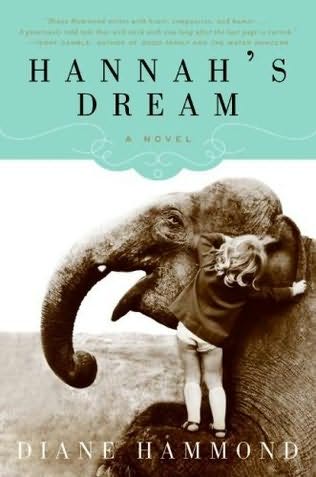
Hannah's Dream by Diane Hammond


This is the sweetest book, and such a gentle read. It is charming, and captivating. A story you will not soon forget.

For 41 years, Samson Brown has been caring for Hannah, the one and only elephant at the Max L. Biedelman Zoo--a zoo that has seen better days. He has vowed not to retire until he can find a devoted caretaker for his Hannah. Sam is overjoyed when he finds Neva Wilson, but despite her care they both realize that Hannah is isolated from other elephants and her feet are bad from standing on hard concrete all day, and they hatch a plot to send Hannah to an elephant sanctuary. The Zoo's unhappy Director is their main adversary though, because she does not want her star attraction and main financial draw to go anywhere else.

This is such a touching and uplifting story written with great poignancy and it proves, as Booklist
says, that love comes in all shapes and sizes.

Here's a couple of quotes to give you just a taste of the wisdom contained in this book. The first is from Maxine L. Biedelman, the colorful woman who started the zoo, who is talking to Samson Brown, Hannah's keeper: "The World is simpler in Africa, Mr. Brown. Not in all ways, of course, but in the important ones. You eat when you're hungry and sleep when you're tired and you know you're nothing more than a gnat, a visitor, forgotten even before you're gone. Africa belongs to the land and the animals. It's no place for the high-strung."

At another point, Maxine Biedelman is looking back on her long life, and says "Do you know what I've been thinking lately? I've been thinking that we're animals, like any others--we senesce, we sink into decrepitude just as they do. But I've wondered if it isn't our special hell that we are able to register the swift passage of time, the lightning speed of it all, and the absoluteness with which it is gone. I feel my age, Mr. Brown, I feel every bit of it, and yet I can recall so very clearly what it was like to be young. It torments me. I should like, just one more time, to feel the winds of Africa, to hear and feel the din and the heat of the Indonesian jungle. The mahouts used to sing as they prepared their supper. They were a joyful people who believed in a joyful world. And indeed, the world is a fine place when one sees it from the back of an elephant."

In the book, when they are looking for something to enrich the environment for Hannah, they try painting. I thought you might enjoy the video below of an elephant painting. It is truly amazing.


Related Posts Plugin for WordPress, Blogger...