I have long admired Le Guin's Earthsea fantasy series. When I saw a quote from this book concerning our cultural perceptions of fantasy--"The direction of escape is toward freedom. So what is 'escapism' an accusation of?"--it made me want to read the ruminations of a varied writer and deep thinker in her eighth decade. I knew from her background--she grew up in a household of anthropologists, views the dominant socio-political American system as problematic, and ideas of anarchism and taoism appear in her work--that her views would be sharp, opinionated, and erudite. Even when she's talking about her cat she is always rigorous in her examination and discourse. Our current society is one that doesn't necessarily value its elders, so it was interesting to read the thoughts of a woman who continues to fight invisibility and will always stand out with her intelligence and wit.
This book about an African American family challenged with dissolution has been receiving a lot of attention and garnering lots of acclamation in book circles recently. Told from several different perspectives, a young black woman and her two children drive to a prison to pick up their white father--Parchman prison, the oldest prison in Mississippi, which represented institutional racism for many years. The 13 year old boy has been raised by his grandparents (who he idolizes) and has a dislike and distrust of his erratic mother. The care of his 3 year old sister has fallen largely to him. The tension between her and her son runs throughout the novel. Her failings are aggravated by addiction and grief, and she risks her children's safety repeatedly as the novel progresses. There is also a supernatural element involving a pair of restless ghosts. Jesmyn Ward is the first woman to have won two National Book Awards, and the first person in her family to have graduated college. This site doesn't let you use half stars, or I probably would have rated this book 4-1/2 stars. It is beautifully written with great lyricism and also painful and heart breaking too. The intimacy in this family portrait is so vivid. You feel the struggle and violence and despair so intensely as it examines ugly truths in their lives--and yet you also feel the strength as well as the limitations of family bonds. Profoundly moving, poetic and haunting. You won't be able to forget it anytime soon.
This poignant retelling of the Prodigal Son story was awarded Book of the Year at the 2017 Christy Awards. I like Martin's writing, and have enjoyed every book I've read of his. He has an uplifting faith that shines through each one without being preachy about it. One of the things I liked best about this book was its emphasis on music, guitars, and song histories. His books are always emotional reads, but if you love music like I do this is a particularly sweet ride. Cooper O'Connell is an itinerant preacher's son who leaves home seeking fame and fortune in Nashville. He quickly learns that his father knew much more than he thought he did. The story is told in three parts beautifully woven together. I don't want to take away anything from your enjoyment of the story if you decide to read it by saying more here. Just read it.
Although Gay is a competent writer, overall I was a bit disappointed with this book. I expected a little more insight into what must be a difficult way for her to live--functioning in a world that is clearly designed for a different type of body. Her story was raw and honest, but I found it a bit repetitive and it got a little irritating to listen to her intellectualize her behavior but take no real responsibility for it, laying it again and again at the feet of the terrible rape she experienced at such a young age. And I do not mean to minimize in any way what a horrible experience that must have been. But, I kept wanting her to embrace a little righteous anger and use it positively in her life instead of wallowing in a sea of self-hate and effectively becoming a victim all over again.
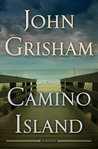
This is a departure from Grisham's usual legal thrillers. It has the same good plotting with clever criminals and many branches of the law represented, but he manages to stay out of the courtroom. This time out he gives us a peek into the world of rare book collecting when priceless manuscripts are stolen from a Princeton University library. The security firm working for the insurance company suspects a prominent bookstore owner, Bruce Cable, but they need someone on the inside to get close to Cable and determine if he has the manuscripts. Mercer Mann, a debt-ridden novelist with writer's block turns out to be the bait. I found this to be a light hearted agreeable read.
Love Jojo Moyes. Me Before You, After You, and now Still Me. Funny, romantic, heartbreaking, poignant. All those things and more. Louisa Clark is so quirky and lovable and Moyes's characters (even the minor ones) so well written...it just pulls you in and keeps you entranced--I didn't want to put it down and definitely didn't want it to end. That's good writing. It's a great read for Valentine's Day and even though it is about Love in all its guises, it's really a story about loving yourself and discovering who you really are.
I would have given this book 3-1/2 stars if I could. I did like it. VanderMeer is a three time winner of the World Fantasy Award--but this book, and the two others in the Southern Reach trilogy Authority and Acceptance, aren't exactly fantasy. The book is quite different and it seems to have split people pretty much into two groups, those who love it and those who think something on the order of what was that I just read? It has a Lovecraft vibe and is a mash of SF/horror. The basic plot is that there is an area of the U.S. that was mysteriously taken over by an environment called Area X. The unknown force that created it surrounded it with a border. The border does have one opening that allows humans to enter and less frequently leave. Numerous expeditions have been dispatched--most have ended in violent deaths or disappearances of those involved. An all female expedition is sent in and they know each other only by their functions--psychologist, surveyor, anthropologist, etc. It is what VanderMeer does with this basic plot that is so interesting. The framework seems to be that humans are isolated, easily manipulated, poorly suited to their natural habitat, and insignificant in the face of untamed splendor. Again, interesting concepts. I'm interested in how he finishes the trilogy.
I saw Ann Patchett's comment about this book being salve for a disordered world, and I couldn't agree more. I found this book to be delightful, old world, and just very courtly in tone yet infused with a lot of humor. It was a Book Club selection, the first book I have ever read by this author, but also such a nice change of pace from what we have been reading the last few years. It makes me want to read Rules of Civility, his first novel, which was ranked by the Wall Street Journal as one of the best books of 2011. This is not the type of book that you'll want to read quickly, but one to set a leisurely pace with in order to savor its finely composed writing.
I usually always finish a book I start, though lately I have softened my position on this. In the case of this book, I only read about half of it--but will probably go back and finish it at some point. Maybe the timing was off. I do know that certain books have to arrive at the appropriate time. It was well enough written, of course, and parts of it I enjoyed--but it just wasn't engaging me the way I wanted it to, and to be honest I guess I was juggling quite a few other books at the time that engaged me more...so I did just stop and put it away.
Mary Shelley combined science and the supernatural in this book to write the world's first science fiction novel. It began as a fireside ghost story and turned into a worldwide phenomenon. And, this is the 200th anniversary of its publication. The story was written during the year without a summer when the eruption of Mount Tambora released vast amounts of ash and rock and sulfuric dust into the air--which dramatically lowered temperatures across many areas of the globe the following year. The bizarre weather left its mark on the culture and the literature. The popularity of the story has only grown over time. I first read this book many years ago (when I was much younger), so I had forgotten a lot of it. This time around I found it so sad. I don't remember feeling that the first time around, but as an adult you can't help but pick up on that. Still, I did enjoy reading it again and find all the supplementary information surrounding it quite fascinating.
I don't believe in prosperity gospel, so that was my major reluctance in reading this book. But I was interested in how someone copes with being diagnosed with Stage IV colon cancer at such a young age and having to leave behind her high school sweetheart/husband and two year old child. She describes her emotions beautifully and realistically and with great humor. A quite interesting read.
A very sad read, but due to the fact that she was a poet, very lyrically written. Definitely makes you think about loss, love, hope and many other qualities of our every day existence. It is a book that explores the richness of love and family, the things that sustain us during our darkest hours. She takes us along with her on her emotional journey--and though it is heartbreaking, and funny even,--she gives us powerful lessons on how to live.
This is the first C. J. Box book I've read, and it's an older title from 2008. He's pretty popular at the library where I work, and now that I've read one of his books, I see why. He considers what he writes to be contemporary westerns. He lives in and writes about Wyoming, but incorporates cutting edge social and cultural issues and another element of the good western--a good man trying to set things right, often against overwhelming odds. The subject of this one is every adoptive parents nightmare-- a teenage birth father who never signed away parental rights shows up and with the help of his powerful father tries to take away a baby daughter from her loving adoptive parents. It quickly turns into a nightmare when sinister information about the boy and his father comes to light and the adoptive parents frantic efforts to keep the child are thwarted at every turn. Suspenseful, compelling, and thought provoking, I found this to be a very good read.
Mercy is radical kindness, says Anne, in her new book--which is a meditation on the benefits of discovering and extending mercy. With her trademark humor and candor, the blessings come raining down. This is a short, beautiful, joyous read that feels like a warm hug from an old friend. Read it. Just read it.
Ove is a curmudgeon--but behind that cranky exterior there is a story--one that Backman tells with such humor and tenderness that I found myself utterly captivated by this sweet and charming book. Ove has strict routines, committed principles, and a very short fuse. When a chatty young couple with two young daughters moves into the complex where he lives and accidentally flatten his mailbox, this puts into motion a series of events that allows Backman to tell Ove's story, and tug at our heart strings all along the way. This book is currently one of Sweden's most popular literary exports since Steig Larsson's "The Girl with the Dragon Tattoo."
To give you just a brief sample of Backman's lovely writing, here is one of my favorite passages: "Death is a strange thing. People live their whole lives as if it does not exist, and yet it's often one of the great motivations forthe living. Some of us, in time, become so conscious of it that we live harder, more obstinately, with more fury. Some need its constant presence to even be aware of its antithesis. Others become so preoccupied with it that they go into the waiting room long before it has announced its arrival. We fear it, yet most of us fear more than anything that it may take someone other than ourselves. For the greatest fear of death is always that it will pass us by. And leave us there alone."
Written as a fictional memoir of a famous author, the story is told in a series of flashbacks. Lucy's childhood was one of extreme poverty, sadness, and isolation. The themes dealt with in this book are important ones...how incompletely we know one another, the nature of love and family, the redemptive power of little things. But the overriding feeling I took away from this book was loneliness and how it permeated everything in her life. This quote pretty much sums it up:
"Lonely was the first flavor I had tasted in my life, and it was always there, hidden inside the crevices of my mouth, reminding me."
Mischling means mixed-blood in German. It was a legal term used in Nazi Germany to denote persons deemed to have both Aryan and Jewish ancestry.
This holocaust story of 12 year old twin sisters who were selected by Josef Mengele, the Auschwitz physician who performed grotesque experiments on selected prisoners (especially twins), as a part of his "Zoo," is haunting and anguished. The story is told in alternating chapters by Stasha and Pearl--the first half concentrating on their captivity, and the second half taking place after the advance of the Soviet army and the liberation of Auschwitz.
Some critics have criticized the book because of the beautiful language used by Konar in telling the tale, and the danger that is inherent in creating art out of such tortured history. But in my opinion, rather than strip the tale of its horror, such language by contrast makes the evil all too real. Nightmarish, dark, and painful as it was--it was still a story beautifully told.
This moving story unfolds in a graveyard over the course of a single night. The Civil War is less than a year old--the fighting has just begun in earnest. President Lincoln's beloved eleven year old son, Willie, dies and is laid to rest in a Georgetown cemetery. From this, Saunders spins a story of love and loss using a panorama of voices (living and dead, historical and invented) asking us how we manage to live and love when everything we love must end? I don't think I've ever read anything quite like it. Beautiful, strange, elegiac, and quite astonishing (with exquisite writing), and yet at times I felt completely adrift. This book just has to be experienced.
This book has been called witty, ramshackle, and outrageous. It is definitely all those things. Fisher details the tragedies of her life as if she was doing stand-up comedy. She never bemoans the things that happened to her and certainly doesn't try to make you feel sorry for her. She is so honest that at times it will make you cringe, but her trademark self-deprecating wit and humor carry the day. And in between the laughs are some serious messages about love and forgiveness. This book is a wild ride but her articulate sharp observations of her battle with her demons and the way that battle played out in her life and the famous people sprinkled through it makes for quite a story.
My favorite quote: "I don't hate hardly ever, and when I love, I love for miles and miles. A love so big it should either be outlawed or it should have a capital and its own currency."
In 1870, Captain Jefferson Kyle Kidd is an elderly widower who is traveling through northern Texas giving live readings to paying audiences who are hungry for news of the world. Having lived through three wars and fought in two, he enjoys his rootless, solitary existence. But his world changes when he is offered a $50 gold piece to deliver a young orphan, Johanna, to relatives in Texas.
Johanna's parents and sister had been killed by Kiowa raiders, but she had been spared and raised as one of their own. After being rescued by the army, she is yet again torn from the only home she knows for a 400-mile journey south through difficult and dangerous terrain with Captain Kidd. Johanna has forgotten the English language, refuses to act civilized, and throws away her shoes. Yet, as the miles pass, the two begin to trust one another and forge a bond.
When they arrive in Texas, the Captain must hand her over to an aunt and uncle she does not remember and who regard her as an unwanted burden. He then faces a terrible choice: abandon the girl to her fate, or become a kidnapper himself. News of the World is a brilliant work of historical fiction that examines the boundaries of family, honor, trust, and responsibility and is well deserving of its selection as a 2016 National Book Award Finalist.
Sy Montgomery is a popular naturalist who in this book explores the emotional and physical world of the octopus. The octopus is an astonishingly complex, spirited creature, with venom like a snake, a beak like a parrot, and ink like an old fashioned pen. It can weigh as much as a man and stretch as long as a car, yet it can pour its baggy, boneless body through an opening the size of an orange. It can change color and shape. It can taste with its skin. Most fascinating of all, they are really quite smart. They represent the great mystery of the Other. They seem completely alien, yet their world--the ocean--comprises far more of the Earth (70 percent of its surface area; more than 90 percent of its habitable space) than does land. Montgomery practices true immersion journalism in pursuit of these wild, solitary animals and chronicles her growing appreciation of this animal by telling us this love story. The book is funny, entertaining, and touching. A captivating book on a quite different intelligence.
I am normally a pretty big Jodi Picoult fan, because her books usually take controversial newsworthy issues and examine them through the eyes of ordinary people. She tries to present both sides of an issue and allows readers to feel sympathetic towards characters on opposing sides of a conflict. However, I must admit this time out, I had a bit of reluctance towards reading her latest effort because it is about race and prejudice, and to be honest I feel about that topic a bit like Morgan Freeman does in the clip below:
But because it is written by Ms. Picoult, I decide to read it anyway, because I was sure it would be well written despite my trepidation. And it is, even though I found some of the motivations and actions of a couple of her main characters a little too trite and stereotypical.
Ruth Jefferson is a labor and delivery nurse at a Connecticut hospital with more than twenty years' experience. During her shift, Ruth begins a routine checkup on a newborn, only to be told a few minutes later that she's been reassigned to another patient. The parents are white supremacists and don't want Ruth, who is African American, to touch their child. The hospital complies with their request, but the next day, the baby goes into cardiac distress while Ruth is alone in the nursery. Does she obey orders or does she intervene?
Ruth hesitates before performing CPR and, as a result, is charged with a serious crime. Kennedy McQuarrie, a white public defender, takes her case but gives unexpected advice: Kennedy insists that mentioning race in the courtroom is not a winning strategy. Conflicted by Kennedy's counsel, Ruth tries to keep life as normal as possible for her family—especially her teenage son—as the case becomes a media sensation. As the trial moves forward, Ruth and Kennedy must gain each other's trust, and come to see that what they've been taught their whole lives about others—and themselves—might be wrong.
Despite my earlier qualms about a couple of characters that were almost caricatures, and a mindset that leans a bit towards victimization and playing the blame game, I found it to be an interesting read.
Good books. Good times. Good stories. Good rhymes. Good beginnings. Good ends. Good people. Good friends. Good fiction. Good facts. Good adventures. Good acts. Good stories. Good rhymes. Good books. Good times.
Proud Bookworm
Yeah, Reading is Sexy
Favorite Books
A Whale for the Killing by Farley Mowat
All Over But the Shoutin' by Rick Bragg
American Gods by Neil Gaiman
At Play in the Fields of the Lord by Peter Matthiessen
Beach Music by Pat Conroy
Fast Food Nation by Eric Schlosser
How Now Shall We Live by Charles Colson
In Defense of Food by Michael Pollan
Life of Pi by Yann Martel
Parchment of Leaves by Silas House
River of Earth by James Still
Standing in the Rainbow by Fannie Flagg
The Cloister Walk by Kathleen Norris
The Kite Runner by Khaled Hosseini
The Know-It-All: One Man's Humble Quest to Become the Smartest Person in the World by A. J. Jacobs
The Mitford series by Jan Karon
The Stand by Stephen King
This quote from Eudora Welty captures perfectly how I feel about books and reading
"I cannot remember a time when I was not in love with them -- with the books themselves, cover and binding and the paper they were printed on, with their smell and their weight and with their possession in my arms, captured and carried off to myself."
Get Caught Reading
Want to find time to read? Fall in book love. Seek out the books that fire your passions. Follow your intellect and your heart. Then time will find you. ...Steve Leveen
Stop thinking this is all there is...
Realize that for every ongoing war and religious outrage and environmental devastation, there are a thousand counter-balancing acts of staggering generosity and humanity and art and beauty happening all over the world, right now, on a breathtaking scale, from flower box to cathedral.
Resist the temptation to drown in fatalism, to shake your head and sigh and just throw in the karmic towel.
Realize that this is the perfect moment to change the energy of the world, to step right up and crank your personal volume; right when it all seems dark and bitter and offensive and acrimonious and conflicted and bilious...there's your opening!
And, finally, believe you are part of a groundswell, a resistance, a seemingly small but actually very, very large impending karmic overhaul, a great shift, the beginning of something important and potent and unstoppable.
...Mark Morford, Newspaper Columnist and Yoga Instructor
CONAN THE LIBRARIAN
Quiet Please!
I read as if time were running out, because technically it is. As I grow older, I find I'm increasingly impatient with mediocre entertainments: I want books that will take my breath away and realign my vision...Barbara Kingsolver
Books are the carriers of civilization. Without books, history is silent, literature dumb, science crippled, thought and speculation at a standstill...Barbara Techman (Writer)
Library
Years may wrinkle the skin, but to give up enthusiasm wrinkles the soul...Samuel Ullman
Old minds are like old horses; you must exercise them if you wish to keep them in working order...John Adams, 2nd President of the U.S.
Every page allows me to live in the main character's thoughts and marvel at how all of us who grew up poor and female are bonded, regardless of where we were raised or who raised us. I not only feel I know this person, but I also recognize more of myself. That's just one of the great joys of reading. Insight, escape, information, knowledge, power. All that and more can come through a good book...If you're going to binge, literature is definitely the way to do it...Oprah Winfrey
 No Time to Spare: Thinking About What Matters by Ursula K. Le Guin




 Posts
Posts


