Friday, March 19, 2010

The area I spend so much time in at home


This is my desk at home. The area I spend so much time in, writing my book blog, and doing class work and library business, not to mention my own personal life tasks that intrude now and again.

This is a close-up of one of the bookshelves above my desk. This one contains books by my two favorite authors, Pat Conroy, and Rick Bragg...as well as an assortment of signed books that I've obtained from authors and a few books on top that I'm reading at the moment.


This is the other shelf with a mixture of books, each and every one of them telling a story about me and my life at the time when they entered it.

I don't know. I think I need a little more kitsch. Maybe a sock monkey or a robot.

Thursday, March 18, 2010

Recent Favorite Covers

Eyes Like Stars by Lisa Mantchev


Perchance to Dream by Lisa Mantchev

Sometimes book covers will just catch your eye. I admit the covers on these pulled me in. Of course I loved the tag lines "All her world's a stage" and "We are such stuff as dreams are made on". Is part of the reason Young Adult books are so hot now due to the fact that their covers are so very interesting? Then I read a few of the quotes about them and was totally hooked. Quotes like: "With an iron-willed girl hero whose magic is with words, and a universe that is also the ultimate theater, Eyes like Stars is the most unusual fantasy I've read this year! I recommend it to anyone who loves drama, strong girls, and rowdy faery folk!"--Tamora Pierce and "Once again Lisa Mantchev has spun a tale like no other--full of romance, magic, adventure, and fairies, too--that readers won't want to put down, even after the curtain has closed." Yep. I'm going to be reading these. You may want to too.

Saturday, March 13, 2010

The Most They Ever Had by Rick Bragg


You know, people ask me all the time, "Who's your favorite author?". I could come up with a list of names within seconds. Some of the names on this list will vary, depending on the latest book I've read, or the day that you happen to ask me. But there are a couple of names that are always at the top of my list, and Rick Bragg is one of them.

Rick is a Pullitzer Prize winner, but more than that, he is a storyteller. And he comes from a long line of storytellers, the Appalachian people, who are his people, and my people too. And I guess the thing I like best about Rick's writing is that he gives voice to these people--these hard working, salt of the earth people, that are all too often forgotten or ignored or caricaturized in our popular culture.

Rick was born and raised on the outskirts of Jacksonville, Alabama, the mill town that is the subject of his latest book. Rick tells the story of the people in this small town who worked in the mill. They worked there because they needed those jobs, even though it filled their lungs with lint and shortened their lives, and because it allowed them to live, as Rick says, "in stiff-necked dignity in the hills of their fathers... so, when death did come, no one had to ship their bodies home on a train." In this area of the country, people who do not work, but could, are despised. In the local vernacular, they are "jest sorry". And it is work that defines them. Rick again..."You need not use foul language to damn a man here. Just say that a day's work would kill him, and you tore him down to the bald nothing."

These are the real people behind the plant closings and layoffs that are a common story around our country these days. Each chapter tells the story of a separate life and through it all there is a background of suffering endured that is grim and sad, yet very real. These tough people do not deserve to vanish alongside their dying industry, and they don't deserve to be forgotten by the labor unions or politicians in Washington. Rick wrote this book for them to champion their cause, and to honor them, a people who were once valued for what they could make, and how fine it was, and how fast they could make it. As Publisher's Weekly says "Bragg again creates a soulful, poignant portrait of working-class Southern life." You really should read this book.


A few years ago, when I saw Rick at the Southern Kentucky Book Festival in Bowling Green, I was lucky enough to get my picture taken with him. I was so proud of that picture with one of my favorite authors that I framed it and put it on my desk at work. I already had a picture of my son on my desk, and when I added this one to it, people just naturally thought it was my husband. I always hastened to correct them, no, no, not my husband, just my favorite author and a Pullitzer Prize winner. When I was telling my husband about this, he got his feelings hurt a bit that I didn't have his picture there, and I wound up taking both pictures down anyway, as I didn't have a whole lot of room for them anyway. I love my husband (you don't stay married to someone for 40 years if you don't). And I do love Rick Bragg (and I believe you will too), but the picture of me and Rick currently sits on top of my bookcase at home.

Tuesday, March 9, 2010

Stop Trashing Books--Donate, not Dumpster!


Here's a link to a very timely blog about an industry that has gone mad in the quest for a best seller. I think once you read it, you'll agree that people should tell book chains and publishers to donate unsold books to non-profits, instead of trashing them.

Tuesday, March 2, 2010

Sweeping up Glass by Carolyn D. Wall

I read the accolades about this Kentucky book, long before I picked it up to read it as our March selection for book club. And I must admit, I was pulled into the story from the opening page and did not want to put the book down. The prose was so rich and magical that it was hard for me to believe this was a debut novel. I also admit that I have a fondness for plucky heroines who battle against the odds in a bleak landscape and this book definitely fits that bill as well.

Someone is killing the beautiful silver faced wolves on Olivia Harker's property in depression era Kentucky, and she intends to find out who, and put a stop to it. In the process, we learn about Olivia's childhood with a mother who rejected and ignored her, then slipped into madness and had to be institutionalized, and a father who she adored. Her life is composed of taking care of her grandson and working very, very hard to make ends meet. She is friends with the blacks of the town at a time when segregation ruled and lynchings were very common. This book has so many different themes, expressed so beautifully--racism, family and community, poverty, coming of age, standing up for what you believe in, all brought together in a powerful character study of real people, told so well that you can practically smell their sweat and experience their stuggle right along side them.

I highly recommend this very engaging story that delivers a huge emotional wallop.


Wednesday, February 24, 2010

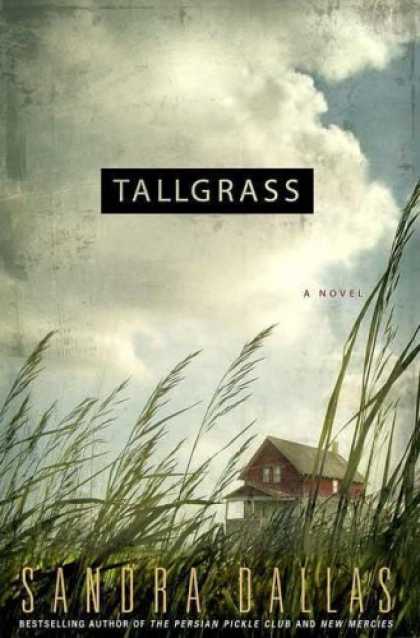
Tallgrass by Sandra Dallas

During World War II, the government opened up a Japanese internment camp in a small Colorado town. This book is written from the viewpoint of a 13-year old girl, Rennie Stroud, who up until that point had led a fairly ordinary and predictable life. Her predictable life vanishes when she is caught between the reality of the harsh treatment these internees experience at the hands of the local townspeople who fear, are angered by, and hate the newcomers, and the sympathy and love she develops for the Japanese helpers from the camp her father employs on their own farm. When a local girl is murdered, all suspicion falls on the members of the internment camp. The final surprise of the book is who committed the murder and why. This book does a great job of capturing the good and evil that was evident during this particular historical period, both in our society, and the people who were a living part of it.

Good Advice for wannabe Writers

I so admire good writing, for after all, it's the stuff that good books are made of. In my recent Shelf Awareness (Daily Enlightenment for the Book Trade), I came across the information below and thought I would share it with you.

Inspired by Elmore Leonard's Ten Rules of Writing, the Guardian asked authors to share their personal rules for writing fiction.

Here's a sampling of the responses they received:

Margaret Atwood: "You most likely need a thesaurus, a rudimentary grammar book, and a grip on reality."

Roddy Doyle: "Do keep a thesaurus, but in the shed at the back of the garden or behind the fridge, somewhere that demands travel or effort. Chances are the words that come into your head will do fine, e.g. 'horse,' 'ran,' 'said.' "

Geoff Dyer: "Have regrets. They are fuel. On the page they flare into desire."

Anne Enright: "The first 12 years are the worst."

Richard Ford: "Marry somebody you love and who thinks you being a writer's a good idea."

Jonathan Franzen: "When information becomes free and universally accessible, voluminous research for a novel is devalued along with it."

Neil Gaiman: (my favorite response) "Remember: when people tell you something's wrong or doesn't work for them, they are almost always right. When they tell you exactly what they think is wrong and how to fix it, they are almost always wrong."

Jeanette Winterson: "Enjoy this work!"

Monday, February 22, 2010

Women Who Read are Dangerous

I love the title of this book. It was the title that originally drew me to it. But I also liked the idea of it. It offers a variety of paintings, drawings, prints, and photographs of women reading and combines them with commentary explaining the context in which the artwork was created, as well as who the reader is, their relationship with the artist, and what she is reading.

There was a time when female literacy was indeed a controversial idea and it took a long time for women to be entirely free to choose what they read. When reading for women was associated with piety or chastity, it was approved of, but some seemed to think it would make them discontent, idle or rebellious. But as Karen Joy Fowler says in her Foreword, "We women who read should take a moment, put down the book, this or any other, look around us. We are experiencing a rare period of triumph. A collection such as this one encourages the long view, reminding us that this triumph has been a long time coming--hard-fought, hard-won. We should note it, enjoy it fast before books disappear entirely, as we've been told (but do not believe) they soon will in favor of digital technologies--shoot-em-up web games, internet quests, chat rooms, weblogs, and other entertainments that haven't yet been invented."

Through it all, women have read, and continue to read. The crisis these days is that men do not. The vast majority of readers are women (more than 80% by some accounts). This is a fascinating compilation, one that manages to capture the intimacy and tranquility of reading, and should appeal to all book lovers as well as those who are interested in the depiction of women in art.

Saturday, February 20, 2010

New Joe Hill Book "Horns"

New Young Adult Book Lover Site

There is a new online reading community for teens called Teen Fire. This fledgling social network just launched with the intention of creating a space where teens can log on and interact with each other and also be exposed to published authors and Young Adult editors. Yes, technology and books can coexist and work together to reach and inspire young adults. This community seems to be growing every day. You can create your own page and customize it with photos, text, videos and apps, and stay connected with the latest news in YA literature. There is a Writers Forum, encouraging aspiring authors to express themselves, where you can post original works of fiction to be read and commented on by peers. There is a YA Book Group spot where you can become a teen reviewer and share your opinion. This site is dedicated to Young Adults who share a common passion: reading. You will have an active say in things you will be seeing on the bookshelves. Be sure to sign up, and ask your friends to do so too.

Saturday, February 13, 2010

The Book Cover Archive


Ever judge a book by its cover? Then this is the site for you.

Warning--allow yourself ample time to really explore this site and all its links, from the Book Cover Archive blog to Sites on Book Cover Design.

Friday, February 12, 2010

To Hell on a Fast Horse: Billy the Kid, Pat Garrett, and the Epic Chase to Justice in the Old West by Mark Lee Gardner


“So richly detailed, you can almost smell the gunsmoke and the sweat of the saddles. ”-- So says Hampton Sides, author of Ghost Stories, Blood and Thunder, and other best selling works of narrative history and literary non-fiction about Mark Lee Gardner's new book about Billy the Kid and Sheriff Pat Garrett's pursuit of the Wild West's most iconic outlaw. It is also the first dual biography of both the Kid and Garrett, who together became legends of the old west. I'm really looking forward to reading this, as it is drawn from a wealth of published scholarship and voluminous primary sources to give us this fresh look at these two larger than life figures.

Sunday, January 31, 2010

World's smallest library

A village in Somerset, England has remodeled a bright red phone booth that was purchased for one pound and turned it into the smallest library in the world.


Patrons line up to swap their already read books for new ones left by other patrons.


Over 100 books and a variety of music CDs and movies are available at this tiny library.

Wednesday, January 27, 2010

This Book is Overdue by Marilyn Johnson

I love being a librarian. It's just the nature of my groove. Here's a book that tells you what it's like being a librarian in the age of too much information. Marilyn Johnson says she wrote this book after chasing dozens of tech-savy librarians who were wrestling the accumulated culture and history of the world in a variety of mutating formats while serving needy techno-stressed patrons. Librarians who were marching boldly into the digital age all the while holding onto values like privacy, accuracy, open access, and free speech. She thinks we've never needed them more, and I guess I would have to agree.

I think I like O Magazine's review of the book the best. They said simply "This is a book for readers who know that words can be wild and dangerous, that uncensored access to information is a right and a privilege, and that the attempt to 'catalog the world in all its complexity' is heroic beyond compare."

Sunday, January 24, 2010

Where I'm From by George Ella Lyon

Award winning author George Ella Lyon was born and raised in the mountains of Kentucky. She has published two collections of poems (Mountain and Catalpa, winner of the Appalachian Book of the Year award), 18 picture books (including Come a Tide, featured on "Reading Rainbow," Who Came Down That Road? a Publishers' Weekly Best Book of the Year, Basket, winner of the Kentucky Bluegrass Award, and, most recently, A Sign, Counting on the Woods, A Traveling Cat, and Book), 3 novels for young readers (including Borrowed Children, winner of the Golden Kite Award), an autobiography (A Wonderful Child, in the Richard Owen Meet-the-Author series), and Choices, a book of stories for adult new readers. Her work appears in the PBS series, "The United States of Poetry," and her adult novel, With a Hammer for My Heart, was featured in Borders Bookstores' "Original Voices" series. She lives in Lexington, Kentucky.

The subtitle of the book is "Where Poems Come From", and this little treasure of a book is not only sprinkled with her poems, but wise little gems about the source and inspiration for them, and suggestions on how to focus on what you want to say and how to say it. I found this book to be a pure delight, just like George Ella Lyon herself is. As she says, "poetry is for you. It's in you--in the rhythm of your heartbeat and your walking, in the music of your talk. This book is to help you see and say that. This book is for the poems in us all."

Here's a little taste of it, the first poem in the book, which is where the title of the book came from:

Where I'm From

I am from clothespins,
from Clorox and carbon-tetrachloride,
I am from the dirt under the back porch.
(Black, glistening,
it tasted like beets.)
I am from the forsythia bush
the Dutch elm
whose long-gone limbs I remember
as if they were my own.

I'm from fudge and eyeglasses,
from Imogene and Alafair.
I'm from the know-it-alls
and the pass-it-ons,
from Perk up! and Pipe down!
I'm from He restoreth my soul
with a cottonball lamb
and ten verses I can say myself.

I'm from Artemus and Billie's Branch,
fried corn and strong coffee.
From the finger my grandfather lost
to the auger,
the eye my father shut to keep his sight.

Under my bed was a dress box
spilling old pictures,
a sift of lost faces
to drift beneath my dreams.
I am from those moments--
snapped before I budded--
leaf-fall from the family tree.

Bird by Bird by Anne Lamott

This is a superb little book, with excellent writing advice for anyone who has ever written or wanted to write. It is funny, wise, and most importantly helpful. My recommendation is to treat yourself to a copy of this book. You won't be sorry that you did.

The title of the book comes from a story the author tells about her older brother when he was about ten years old. He was trying to get a report on birds written that he had been procrastinating over for 3 months. It was due the next day. They were gathered at their family cabin and he was at the kitchen table close to tears, surrounded by binder paper and pencils and unopened books on birds. He was absolutely immobilized by the hugeness of the task ahead of him. Her father sat down beside him, put his arm around her brother's shoulder, and said, "Bird by bird, buddy. Just take it bird by bird."

The book is split into five parts. Part One: Writing (which includes Getting Started, Short Assignments, Shitty First Drafts, Perfectionism, Character, Plot, Dialogue, etc.); Part Two: The Writing Frame of Mind (which includes Looking Around, The Moral Point of View, Jealousy, etc.); Part Three: Help Along the Way (which includes Index Cards, Writing Groups, Writer's Block, etc.); Part Four: Publication and Other Reasons to Write (which includes Finding your Voice, Giving, etc.); and Part Five: The Last Class.

And lest you think that being published is the end all and be all of writing, let me quote just one small part of this delightful guide through a writer's world:

"Almost every single thing you hope publication will do for you is a fantasy, a hologram--it's the eagle on your credit card that only seems to soar. What's real is that if you do your scales every day, if you slowly try harder and harder pieces, if you listen to great musicians play music you love, you'll get better. At times when you're working, you'll sit there feeling hung over and bored, and you may or may not be able to pull yourself up out of it that day. But it is fantasy to think that successful writers do not have these bored, defeated hours, these hours of deep insecurity when one feels as small and jumpy as a water bug. They do. But they also often feel a great sense of amazement that they get to write, and they know that this is what they want to do for the rest of their lives. And so if one of your heart's deepest longings is to write, there are ways to get your work done, and a number of reasons why it is important to do so.

And what are those reasons again?

Because for some of us, books are as important as almost anything else on earth. What a miracle it is that out of these small, flat, rigid squares of paper unfolds world after world after world, worlds that sing to you, comfort and quiet or excite you. Books help us understand who we are and how we are to behave. They show us what community and friendship mean; they show us how to live and die. They are full of all the things that you don't get in real life--wonderful, lyrical language, for instance, right off the bat. And quality of attention: we may notice amazing details during the course of a day but we rarely let ourselves stop and really pay attention. An author makes you notice, makes you pay attention, and this is a great gift. My gratitude for good writing is unbounded; I'm grateful for it the way I'm grateful for the ocean. Aren't you?"

Yes, I am.

Sunday, January 10, 2010

The Underneath by Kathi Appelt

I absolutely loved this book by Poet, Author, Teacher, Kathi Appelt. Kathi is the author of over thirty books for children and young adults. She has taught creative writing to both children and adults and currently serves on the faculty at Vermont College of Fine Arts in their MFA in Writing for Children and Young Adults program. She also teaches an occasional course in creative writing at her alma mater, Texas A&M University. Her books have won numerous national and state awards.

One reviewer calls it Watership Down meets The Incredible Journey meets Holes meets The Mouse and his Child. In other words, this book is probably going to be an instant classic. Kathi Appelt's writing style is beautiful and quite lyrical, and it just begs to be read aloud. The story is dark and haunting and heartrending and infused with a deep and abiding knowledge and respect for the natural world. Because of the cruelty experienced by several of the main animal characters, this book would probably not be suitable for the younger child, but older kids and young adults will find much to admire in this magical story.

The story involves a cruel man, Gar-Face, who lives inside a dilapidated shack in the backwaters of the bayou, a lonely chained hound dog, Ranger, who the man starves and beats and keeps on the end of a chain, and a calico cat about to have kittens who will surely be used as alligator bait should Gar-Face find them. But they are all safe as long as they stay in the Underneath. There is also a subplot to the story involving Grandmother Moccasin, a shape shifting water snake, who has been buried in a jar in the roots of a loblolly pine for a thousand years, the Caddo people (an ancient tribe) and its members Hawk Man and Night Song that Kathi manages to weave into the story as she builds it to a suspenseful climax. David Small's drawings really compliment and don't distract from the story, and each section of the story is told briefly, in just a few pages. An unforgetable and exceptional tale.

Tuesday, January 5, 2010

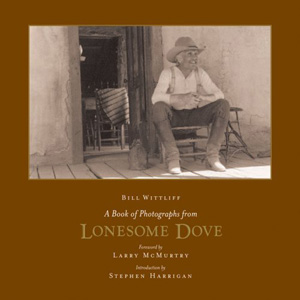
A Book of Photographs from Lonesome Dove by Bill Wittliff

I've always loved westerns. Growing up, my Dad was a big fan of True West magazine (which I devoured), and when I was old enough I graduated to the writings of Louis L'Amour, where I always felt right at home.

A friend of mine loaned me this book because he's a big fan of Lonesome Dove, and I am too (who isn't?) . The visual imagery in these photos truly make you feel like you have stepped back in time. This is fine art photography that is worlds apart from ordinary production stills. And this is the thing you have to remember about Lonesome Dove, Larry McMurtry's epic tale of two aging Texas Rangers who drive a herd of stolen cattle 2,500 miles from the Rio Grande to Montana to found the first ranch there. It captured the imagination of the public. When it was published in 1985, it became a New York Times best seller and won the Pulitzer Prize. More than two decades after its publication, it still sells tens of thousands of copies every year. The miniseries, which first aired in 1989 on CBS garnered an even wider audience. Twenty-six million households watched the premier episode, and millions more have watched each time the movie was rerun on TV, video, or DVD. The miniseries was nominated for eighteen Emmy Awards and won seven. It also won Golden Globe Awards for Best Television Miniseries and Best Actor; a Peabody Award; the D. W. Griffith Award for Best Television Series; National Association of Television Critics Awards for Program of the Year and Outstanding Achievement in Drama; and the Writers' Guild of America Award for Best Teleplay.

This book brings the sweeping visuals of the miniseries to the printed page. These photos are reminiscent of the cowboy photographs of Erwin Smith and the Western paintings of Frederic Remington and Charles M. Russell. A definite feast for the eyes, and if you are a western lover, a feast for your soul too.

Monday, January 4, 2010

Made from Scratch by Jenna Woginrich

In a world of mass-produced food, factory-stitched clothing, 300-channel cable television, and computer-centric desk jobs, it's easy to overlook the simple pleasures of eating homegrown vegetables, raising animals naturally and humanely, wearing hand-sewn clothing, or simply enjoying an evening of unplugged entertainment. Inspired by her growing admiration for small farmers and her equally strong distaste for out-of-control consumerism, Jenna Woginrich, a 26-year-old web designer, decided to take greater control of her life and learn a few basic country skills. She taught herself how to bake, spin wool, sew, raise chickens, grow vegetables, and play the fiddle and the mountain dulcimer. This fine simple book is for anyone yearning for the satisfactions that come with being more self-reliant and leading a more sustainable life.

Here's the lineup of Chapters: Chickens; Grow Your Own Meal; Beekeeping; The Country Kitchen; Old Stuff; DIY Wardrobe; Working House Dogs; Angora Rabbits: Portable Livestock; Homemade Mountain Music; Outside the Farm; and Want More? And if you want more, visit her at http://www.coldantlerfarm.blogspot.com/

Walking the Trail: One Man's Journey Along the Cherokee Trail of Tears by Jerry Ellis

In 1838, the Cherokee Nation thrived in Alabama, Tennessee, Georgia, and North Carolina. The eighteen thousand Indians had their own newspaper; they raised corn, cotton, hogs, and cattle: they lived in peace. But in that same year, U. S. soldiers rounded up the Cherokees and forced them to walk nine hundred miles across eight states to Oklahoma, where they were put on reservations. Along the way, thousands of them died, and this haunted path became known as the Trail of Tears.

I enjoyed Jerry Ellis's story about his 900 mile walk retracing the Cherokee Trail of Tears, following the route of his ancestors. Jerry was born and raised in the old Cherokee Nation in Fort Payne, Alabama. He made his walk to honor those who had died along the trail. Along the way, he encounters the modern day people living in the small southern towns (who many times told him their own stories), slept in a tent in woods or meadows, fished the streams, built campfires, and tried to understand the rich, tragic history of the Cherokee people. It is a book that is filled with insight, but I think I have to agree with Terry Johnston, a western author who wrote on the back cover of this book "What Jerry Ellis does best is to magically touch the wanderer down deep inside all of us with his eloquent prose."
Related Posts Plugin for WordPress, Blogger...